B | L | R | D denotes included breakfasts, lunches, receptions and dinners.
Day 1 | Depart gateway city
AHI FlexAir passengers depart for Porto, Portugal. Please check your luggage from your gateway city to your arrival city. Your claim checks should have the following airport code: OPO.
Day 2 | Porto, Portugal | Baiona, Spain
Parador de Baiona
R | D
Arrive at Porto Airport in Portugal. Proceed through immigration to the baggage claim area and retrieve your luggage. After completing customs, AHI FlexAir passengers traveling on flights that qualify for the group arrival transfer and Land Program passengers who have purchased seats on the group transfer should exit the baggage claim area and proceed to the designated meeting spot, where an AHI Travel representative will meet you. The meeting location will be provided with your final documents.
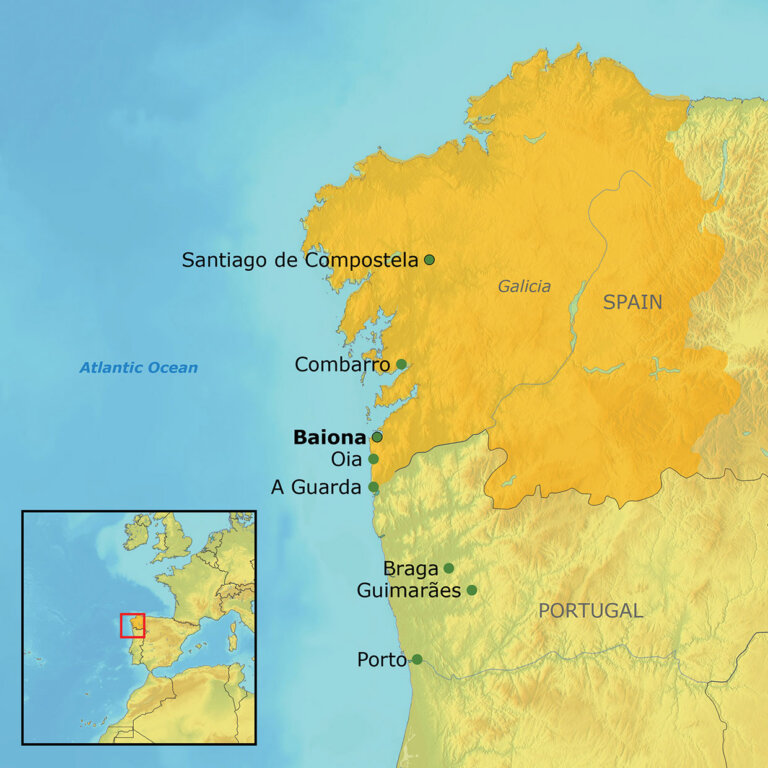
Transfer to the Parador de Baiona in Baiona, Spain. Please note, if you arrive before check-in time, your room may not be immediately available.
This evening, get to know your fellow travelers at the Welcome Reception and Dinner in the parador.
Day 3 | Baiona
Parador de Baiona
B | L
Start each day with a delicious breakfast buffet at the parador.
Enrichment: History of Galicia. A local expert traces Galicia’s fascinating story, from its early Celtic settlers, incorporation into the Roman Empire and rule by Germanic tribes to the profound influence of its Christian heritage, especially the veneration of the apostle St. James. Since the 10th century, pilgrims have traveled along the network of routes that form the renowned Camino de Santiago, or the Way of St. James, to their ultimate goal, the tomb of St. James in the Cathedral of Santiago de Compostela.
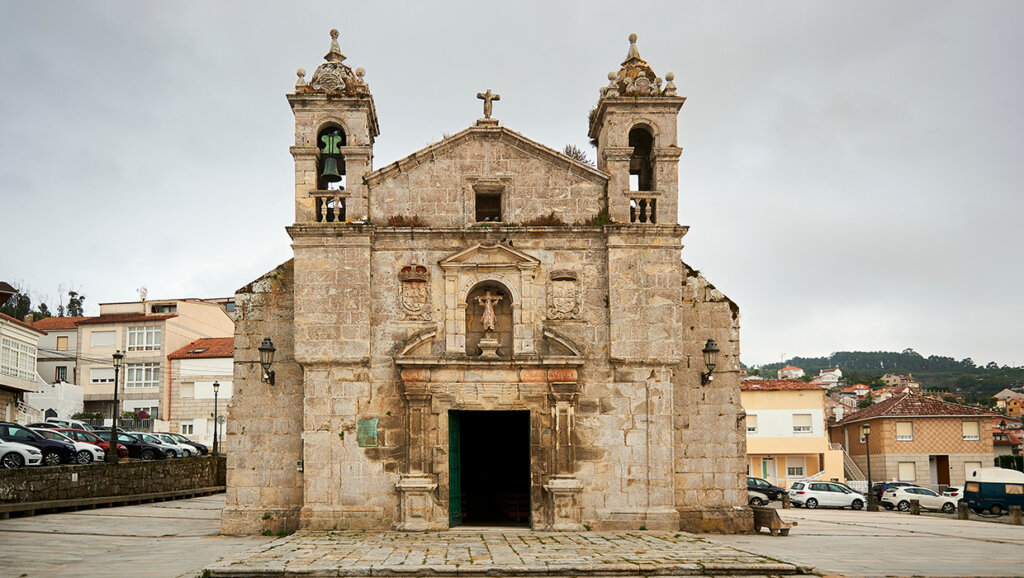
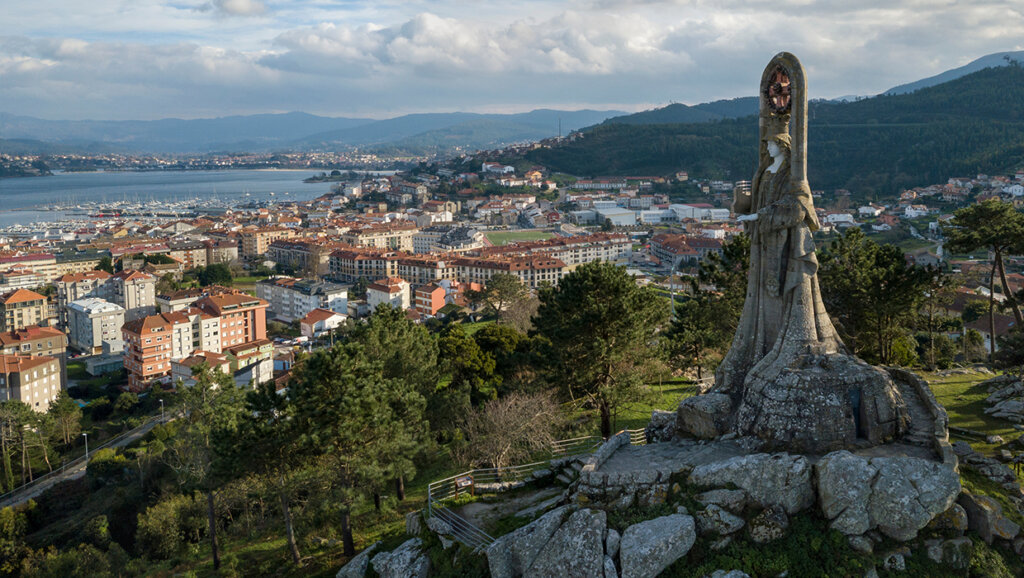
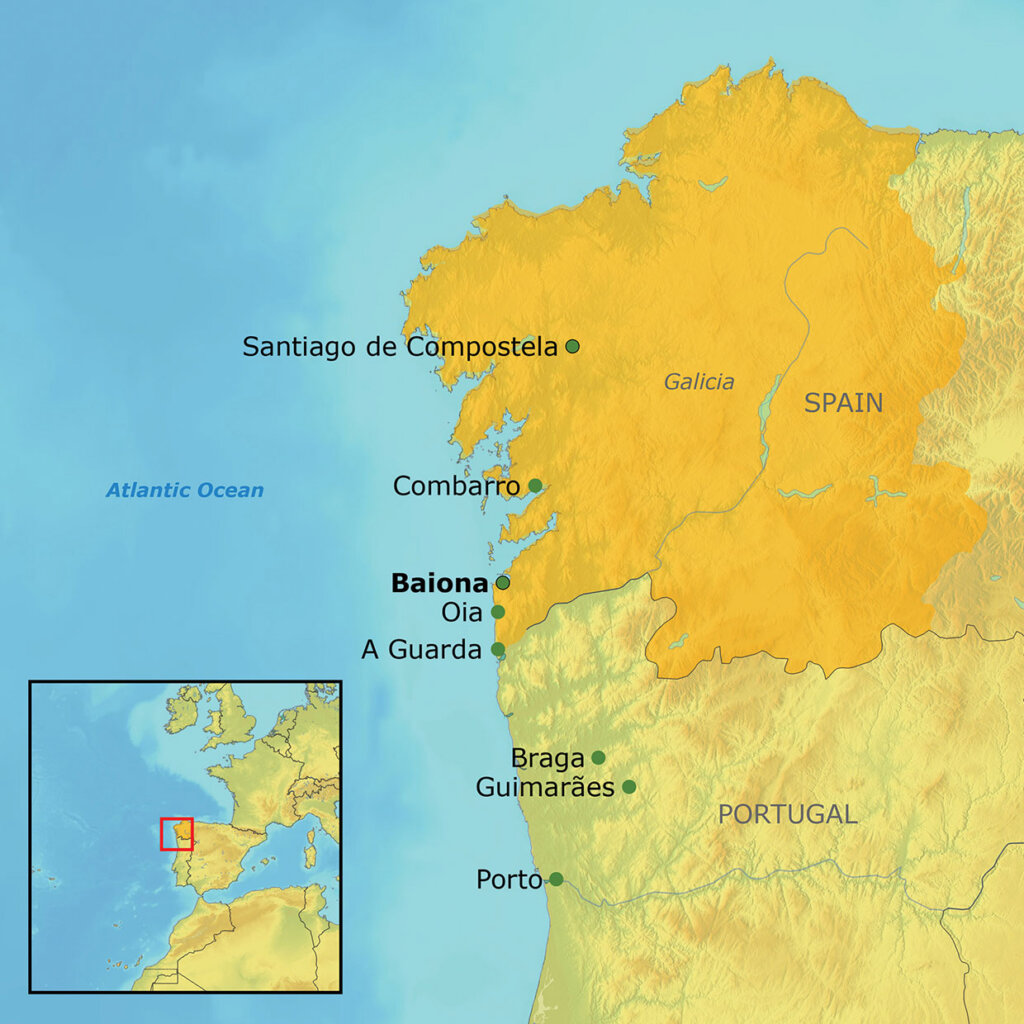
Baiona. Baiona sits in the heart of the Rías Baixas, a spectacular landscape of craggy cliffs, windswept beaches and rolling hills shaped by four large estuarian inlets along Galicia’s southwestern coast. On a guided walk, enjoy an introduction to this charming medieval port town at the mouth of the Ría de Vigo estuary. See the 17th-century Church of Santa Liberata built to honor a female martyr of Baiona; the 13th-century Ex-Collegiate Church of Santa María; and other highlights. Then, make your way to the harbor, where a replica of the famous caravel, the Pinta, is moored. In March 1493, the Pinta, part of Christopher Columbus’ first voyage and piloted by Martín Alonso Pinzón, landed in Baiona, bringing the first news to Spain of the fleet’s transatlantic travels. Step aboard to get a glimpse into what life at sea was like for the crew. (Moderate)
After your walk, sit down for lunch at a restaurant in Baiona.
Free Time: Make your own plans for exploring this afternoon. Perhaps you’ll take in the scenery on popular walking routes such as the Paseo de Alfonso IX promenade or the path along the old fortress wall that surrounds the parador. Throughout your journey, your Travel Director can offer suggestions on sightseeing and dining options.
Day 4 | Guimarães, Portugal | Braga | Baiona, Spain
Parador de Baiona
B | L
Enrichment: Northern Portugal. Gain interesting historical insights about this region, which played a crucial role in the founding of the Portuguese nation in the Middle Ages.
Historic Gems of Northern Portugal. This morning, cross into Portugal and journey to Guimarães, the birthplace of Portugal’s first king, Alfonso Henriques, or Alfonso I, who ruled from 1139-1185. On a guided walk, admire the splendidly preserved medieval architecture in the compact historic center, a UNESCO World Heritage site. Pass by Guimarães Castle, built in the 10th century and later fortified in the 13th century, and stroll through delightful, lively plazas like the Largo da Oliveira and Prace de São Tiago, lined with some of the city’s oldest buildings. Your visit wraps up with a tasty lunch of Portuguese specialties.
After lunch, travel to Bom Jesus do Monte Sanctuary, a UNESCO World Heritage site near the city of Braga atop Mount Espinho. This lovely religious complex is celebrated for its elaborate, outdoor baroque staircase adorned with fountains and sculptures, known as the Sacred Way, which leads to the 18th-century Basilica of Bom Jesus. Throughout the centuries, devout pilgrims have chosen to ascend the 573 stairs on their knees. On a guided tour, see the basilica’s interior details, learn about the significance of the staircase’s three sections and enjoy the panoramic views over Braga. (Moderate)
Free Time: Pursue your own interests in Baiona this evening.
Day 5 | Combarro
Parador de Baiona
B | L
Combarro. Galicia’s Rías Baixas boasts a rich maritime culture deeply rooted in fishing. In fact, the city of Vigo near Baiona is Europe’s largest fishing port, supplying Spain and other countries with an abundance of fresh Atlantic fish, such as seabass, mackerel, sardines and hake as well as numerous varieties of shellfish. This morning, get a sense of the traditions of life by the sea in the small fishing village of Combarro. With your guide, meander down intimate, atmospheric lanes lined with casas marineras, or fishermen’s houses, at the water’s edge. Around the old quarter, you’ll see many 18th-century stone hórreos, or granaries, raised on stilts to keep food and grain dry and out of reach of pests, as well as weathered cruceiros, or stone crosses. These sacred markers typically feature the crucifixion of Christ on the inland side and the Virgin Mary facing the sea. (Moderate)
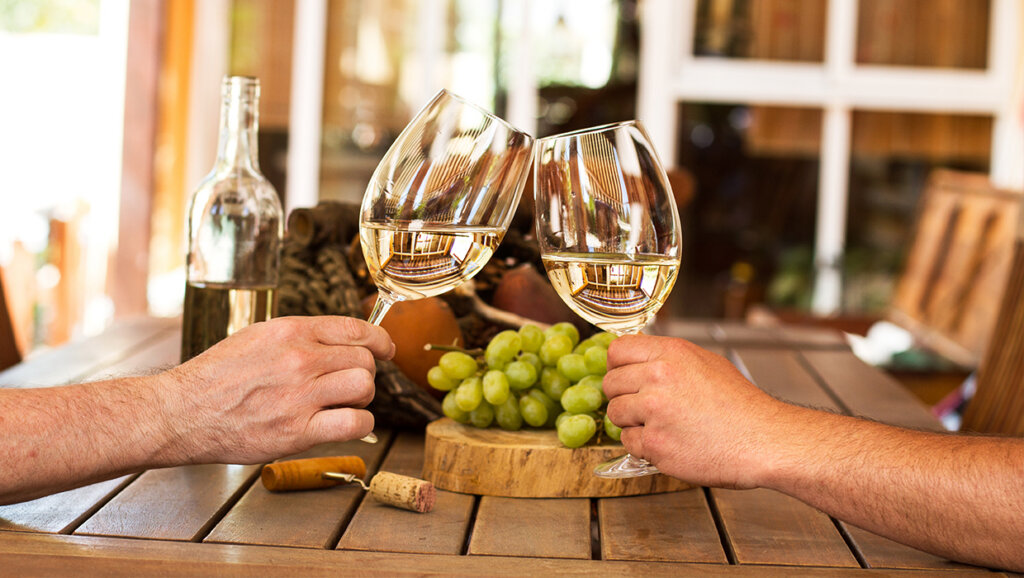
AHI Connects | Rías Baixas Winery Visit & Lunch. Rías Baixas’ proximity to the Atlantic creates an excellent climate for grape-growing, and the region is acclaimed for its signature, crisp white wines produced with the Albariño grape. At a well-regarded winery, sample the aromatic Albariño and other varietals as you savor a flavorful lunch of Galician dishes. (Moderate)
Day 6 | Porto, Portugal | Baiona, Spain
Parador de Baiona
B | D
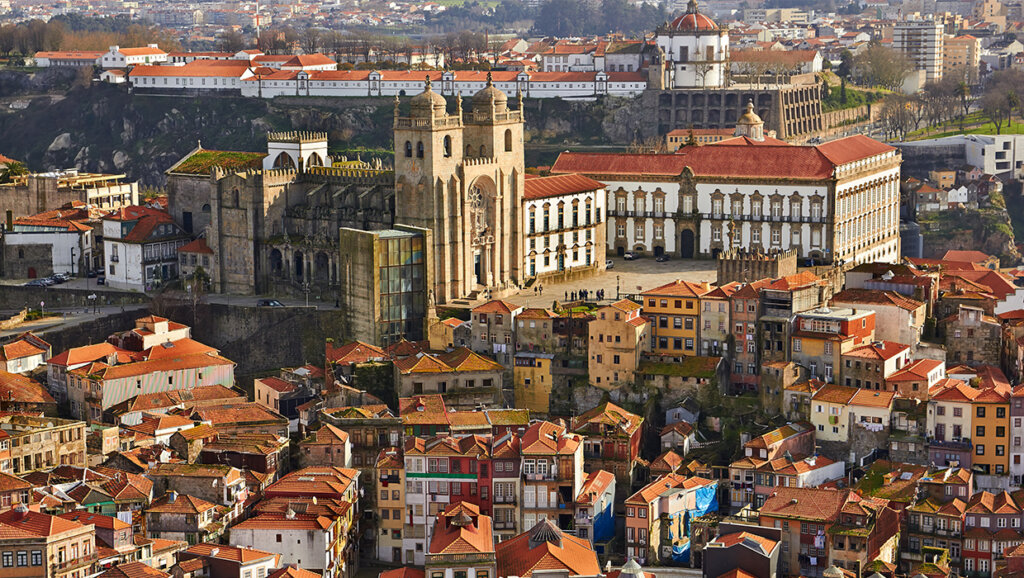
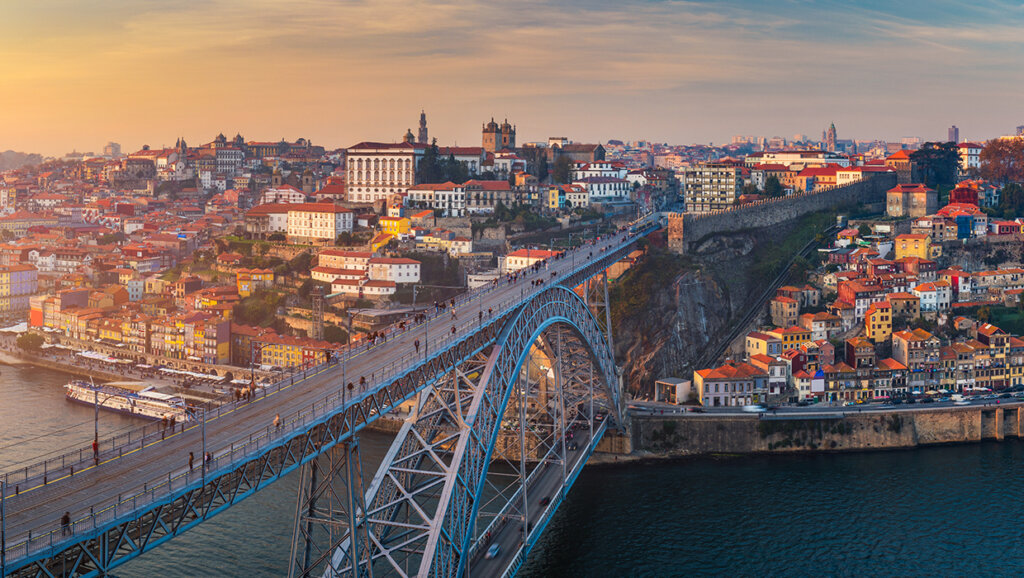
Porto, Portugal. Today, get acquainted with captivating Porto, Portugal’s second-largest city, with a wonderful historic center designated a UNESCO World Heritage site. Its vibrant centerpiece is the Ribeira district, where colorful buildings hug the Douro’s riverbanks and the striking, double-decker Dom Luís I Bridge looms over the water. Begin your explorations with a guided tour of the majestic Sé do Porto, or Porto Cathedral, overlooking the city. First constructed in the 12th century, it now reflects a mix of Romanesque, Gothic and baroque influences after centuries of renovation. Inside, marvel at the beautiful rose window, gleaming gold altars and the serene Gothic cloister embellished with 18th-century murals of blue-and-white azulejo tiles. Next, meander with your guide along the narrow streets to see more highlights, including the São Bento Railway Station, built in 1916 and decorated with stunning azulejo tile murals depicting Portuguese history. During some free time in the Ribeira, choose a nice spot for lunch on your own, then rejoin your group. Take a short cruise across the Douro River for a port wine tasting in Vila Nova de Gaia, the historic home of Portugal’s famed port wine cellars. (Moderate)
Back in Baiona later, meet for dinner in the parador this evening.
Day 7 | Santiago de Compostela
Parador de Baiona
B
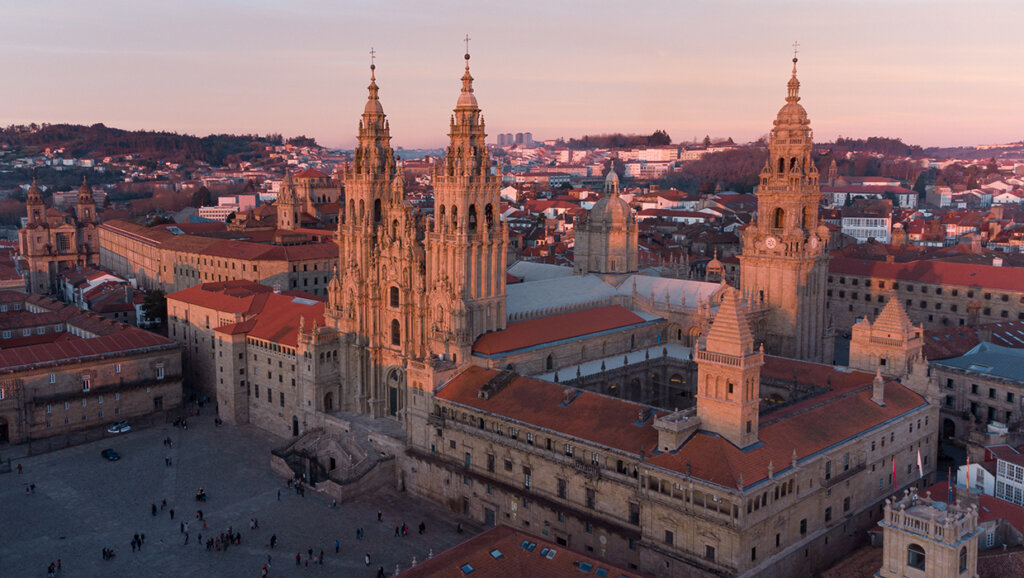
Santiago de Compostela. Named a UNESCO World Heritage site, the old town of Santiago de Compostela is dominated by its magnificent cathedral. Construction of the cathedral began in the 11th century in the Romanesque style with many structural expansions following in subsequent centuries, most notably during the baroque period. During your guided tour, appreciate the special atmosphere of this revered destination, the journey’s end for pilgrims on the Camino de Santiago. The ornate, baroque main chapel dazzles with a silverwork altarpiece encasing a statue of Saint James and topped by a glittering baldachin of angels. Directly below this main chapel lies the apostolic crypt containing the remains believed to be those of St. James the Apostle. Take time to study the intricately decorated chapels and highlights like the granite and painted Pórtico de la Gloria installed in 1188, which features superbly rendered biblical figures by Master Mateo.
Later, relish the old town’s picturesque beauty on a guided walk. Around the cathedral, gaze up at the impressive baroque façade that fronts the Plaza of Obradoiro; stroll to the Plaza de la Quintana to see the Puerta Santa, or Holy Gate, opened only in Jubilee Years; and check out the cathedral’s sole remaining Romanesque façade in the Plaza de las Platerías. Conclude your tour at the Mercado de Abastos, a buzzing market brimming with fresh seafood and meat, just-picked produce, cheeses and tempting pastries. (Moderate)
Free Time: Create your own plans for lunch and exploring in Santiago de Compostela before returning to Baiona for an evening at leisure.
Day 8 | Oia | A Guarda
Parador de Baiona
B | L | R | D
Coastal Portuguese Way. The Camino de Santiago pilgrimage comprises more than 200 routes, including almost 50 in Spain and nine in Portugal. Today, take in the wild splendor of the Camino Portugués Coastal route on a scenic drive to Oia, a stop on the route. Enjoy a stop for coffee and the gorgeous coastal views. Continue to A Guarda, and if you’d like, set off on a refreshing walk along one of the coastal paths that begins at the mouth of the Miño River. After lunch with your group in A Guarda, head up to Mount Santa Trega for expansive views of the Atlantic Ocean, the coasts of Spain and Portugal, and the Miño River. On the mountaintop, take a guided tour of the archaeological site of Castro de Santa Trega, an ancient, fortified Celtic village. At its height in the first century B.C., it was one of the largest Celtic settlements in this area of the Iberian Peninsula. (Moderate)
Tonight, gather with your fellow travelers at the parador for a Farewell Reception and Dinner in celebration of your wonderful sojourn.
Day 9 | Depart for gateway city
B
After breakfast, AHI FlexAir passengers traveling on flights that qualify for a group transfer and Land Program passengers who have purchased seats on the group transfer depart for Porto Airport in Portugal for your return flights home. Your Travel Director will provide the details.